

Posted by Will Keyser
Published on July 29, 2026
Maximizing Efficiency with Managed IT Services
Technology should help your business move faster – not create more complexity.
Yet many organizations spend too much time reacting to IT issues, managing multiple vendors, and keeping aging systems running instead of focusing on strategic priorities. Managed IT services provide a proactive approach that keeps technology reliable, secure, and aligned with business goals.
Rather than simply fixing problems as they arise, managed IT services combine proactive monitoring, maintenance, strategic planning, and ongoing support into a single service model. Businesses benefit from predictable costs, reduced downtime, stronger cybersecurity, and the flexibility to scale without continually expanding internal IT resources.
By partnering with a managed services provider, organizations gain access to specialized expertise and enterprise-grade technology while allowing internal teams to focus on innovation, customer experience, and long-term growth.
Understanding Managed IT Services
Managed IT services encompass a wide range of offerings, delivered by third-party companies known as Managed Services Providers (MSPs) to comprehensively manage an organization’s IT environment.
Services are typically governed by a service level agreement (SLA) that defines up-time targets, response times, and support hours, making the provider contractually accountable for the performance of your IT environment.
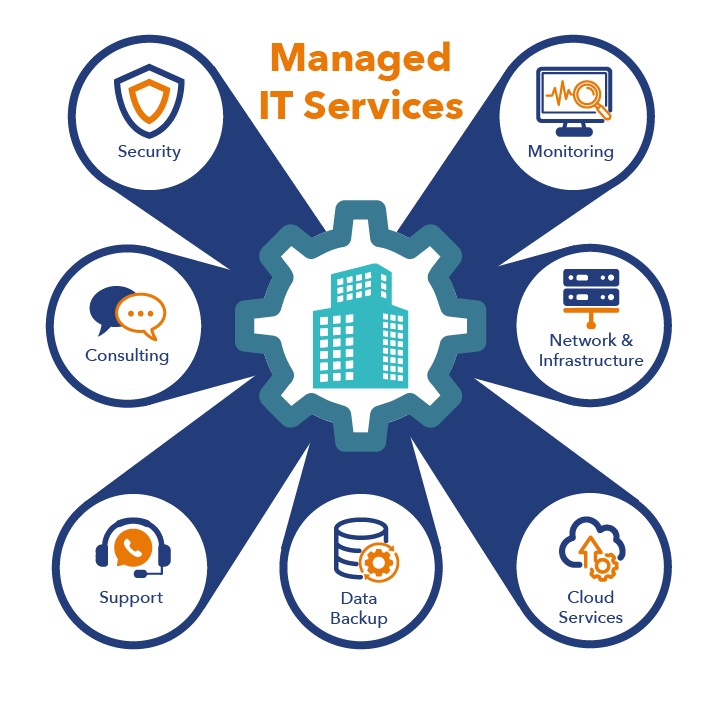
MSPs offer various services tailored to meet business needs. The scope includes:
Remote network monitoring and security
Data backup and disaster recovery
IT infrastructure management
Cloud computing services
Co-managed IT
Such providers should work closely with teams to align technology with business goals in an efficient manner.
By outsourcing tasks to a managed service provider, businesses can better allocate resources towards innovation and customer satisfaction, focusing on growth instead of IT issues. This empowers companies to maintain a competitive edge in an ever-evolving technology landscape.
At Visual Edge IT, managed IT services go beyond keeping systems operational. We help organizations modernize, operate, and secure their technology environments through one accountable partner. Instead of coordinating multiple vendors for IT, cybersecurity, backup, communications, and print, businesses gain a single team aligned around business outcomes.
The Key Benefits of Managed IT Services
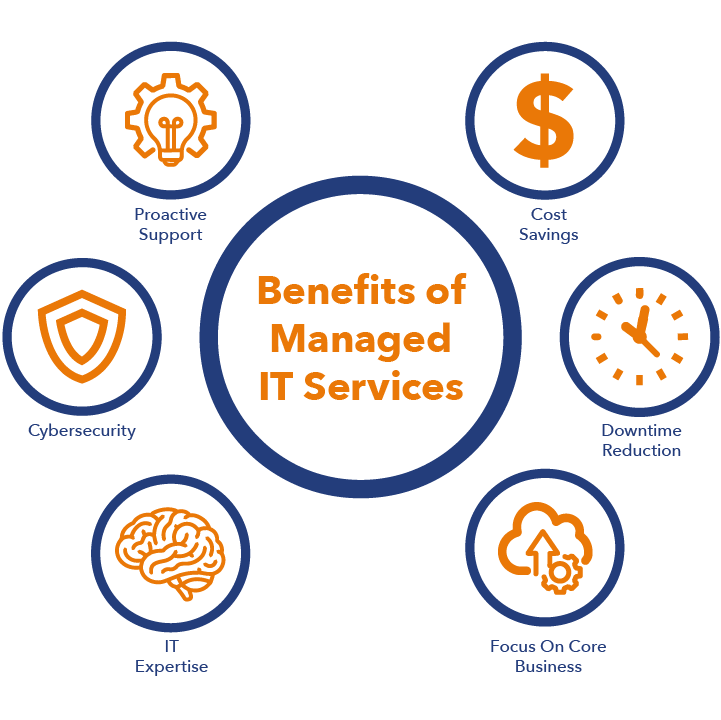
Technology is essential to every part of your business, but managing it effectively requires time, specialized expertise, and ongoing investment. Partnering with a managed IT services provider offers a path to predictability and peace of mind. Fixed monthly pricing simplifies budget management and forecasting, while proactive monitoring helps maximize system uptime and enables rapid issue resolution before small problems become costly disruptions.
The result is a more efficient, resilient technology environment that allows your team to stay focused on core business objectives. Read on to discover the top reasons why organizations are choosing managed IT services.
1. Cost Efficiency and Predictable Spending
Managed IT services enhance cost efficiency by eliminating many expenses tied to in-house IT departments. Companies can reduce the costs of recruiting, training, and retaining skilled IT staff.
Additionally, managed services offer predictable monthly costs. This transparency allows businesses to plan their budgets without fear of unexpected IT expenses. Predictable spending simplifies financial planning and enables more strategic allocation of resources.
By preventing costly downtime and optimizing IT infrastructure, managed services contribute to overall financial stability. Businesses can allocate more resources to growth initiatives.
2. Access to Expertise and Advanced Technology
Managed service providers deliver specialized expertise that in-house teams often lack. Their experts stay updated with industry trends and technological innovations.
Businesses benefit from access to advanced technologies without bearing heavy acquisition costs. MSPs ensure that clients are running modern, well-maintained systems suited to their needs.
By leveraging a managed service provider's deep knowledge, businesses gain a technological edge. This access can help companies stay competitive in an ever-evolving market.
3. Enhanced Security and Compliance
Security is a top concern for businesses today. Managed IT services provide robust security measures, safeguarding against cyber threats. With Visual Edge IT, security is built into every managed services engagement—not treated as an optional add-on. Organizations can extend Core IT services with managed cybersecurity, endpoint protection, backup and disaster recovery, security risk assessments, and virtual CISO guidance as their needs evolve.
Providers implement advanced security protocols tailored to specific business needs. Regular security assessments and updates ensure the protection of sensitive data.
Compliance with industry regulations is also simplified. MSPs help businesses navigate complex legal requirements with ease. Some security and compliance benefits include:
Implementation of the latest cybersecurity measures
Regular audits and risk assessments
Support for compliance frameworks including HIPAA, PCI DSS, and SOC 2
4. Proactive Monitoring and Reduced Downtime
Managed services focus on proactive monitoring to maintain seamless operations. Continuous oversight identifies issues before they disrupt operations.
This approach significantly reduces downtime, ensuring that systems function efficiently. Quick detection and resolution of problems keep businesses running smoothly.
By minimizing disruptions, companies can maintain high productivity levels. Consistent system performance translates into satisfied customers and employees.
Proactive monitoring is most effective when it's backed by experienced engineers who understand your environment. Visual Edge IT combines 24/7 monitoring with nationwide technical expertise and local support teams that can quickly resolve issues before they impact productivity.
5. Scalability and Flexibility
Businesses evolve, and their IT needs grow with them. Managed IT services offer scalability, adapting to changing demands easily.
Providers allow businesses to scale up or down without financial strain. This flexibility ensures that IT resources match current needs. Key scalability features include:
Adjusting resources based on real-time demands
Accommodating growth without significant investments
Customizable service plans for various business sizes
Whether supporting a single office or dozens of locations nationwide, Visual Edge IT combines national resources with local service teams to deliver consistent support as organizations grow.
This adaptability allows businesses to remain agile and responsive in a dynamic market.
6. Strategic IT Planning and Consulting
Managed IT services don't just fix problems; they plan for the future. Providers offer strategic consulting to align IT with business goals.
They help design comprehensive IT roadmaps that guide technology investments. This strategic guidance ensures that IT supports long-term business objectives.
By working closely with companies, MSPs craft tailored IT strategies. This collaboration results in more effective and targeted technology use.
7. Focus on Core Business Objectives
Outsourcing IT tasks to managed service providers frees companies to focus on core objectives. This delegation allows internal teams to concentrate on strategic initiatives.
By handling routine IT operations, MSPs minimize distractions. Companies can direct their efforts toward business growth and innovation.
Ultimately, managed IT services help businesses optimize their operations. This focus leads to greater efficiency and success in achieving critical goals.
Managed Services Benefits and Risks
Managed IT services offer a range of significant benefits, but there are also some potential risks to consider. Understanding both sides helps businesses make informed decisions.
These services provide benefits such as cost savings, access to expertise, and improved security. They also ensure scalability and enable businesses to focus on their core objectives. However, outsourcing IT functions can bring potential risks, such as reduced control over IT operations or possible dependency on external providers.
It's essential to weigh these benefits and risks carefully. Decision-makers should evaluate:
Service provider reliability and reputation
Security measures in place
Compatibility with business needs
By assessing these factors, businesses can leverage managed IT services effectively while minimizing potential downsides. This balanced approach ensures that organizations maximize the advantages while protecting against possible challenges.
Unlike providers that focus on only one aspect of IT, Visual Edge IT delivers integrated managed services spanning Core IT, cybersecurity, backup and disaster recovery, cloud services, communications, and print infrastructure. This unified approach reduces vendor complexity while improving accountability.
Why Use a Managed Service Provider?
Utilizing a managed service provider (MSP) brings numerous advantages to businesses. These benefits include expert support and round-the-clock service. Businesses can enhance efficiency by leveraging the expertise of MSPs.
Additionally, MSPs offer peace of mind through proactive monitoring and risk management. They ensure that IT systems are up-to-date and secure. Key reasons to choose an MSP include:
Access to cutting-edge technology
Improved cost management
Reduction in IT downtime
Strategic IT guidance
Compliance
By partnering with an MSP, businesses can focus on growth and core activities, leaving IT complexities behind.
What to Look for in a Managed IT Services Provider
Choosing a managed IT services provider is about more than outsourcing day-to-day technology support. The right partner should help your organization reduce risk, improve productivity, and align technology with long-term business goals. As you evaluate providers, look for these key qualities:
Proactive, Not Reactive
The best managed IT providers don't simply wait for problems to occur .They work continuously to prevent them. Through 24/7 monitoring, routine maintenance, software updates, and performance optimization, proactive providers can identify and resolve many issues before they disrupt your business.
Comprehensive Technology Expertise
Modern business technology extends far beyond desktops and servers. Look for a provider that can support your broader technology ecosystem, including network infrastructure, cloud services, Microsoft 365, cybersecurity, backup and disaster recovery, and strategic IT planning. A partner with comprehensive expertise can eliminate vendor complexity and provide more consistent support across your environment.
Scalable Support That Grows with Your Business
Your technology needs today may look very different a few years from now. Whether you're opening new locations, expanding your workforce, or adopting new cloud applications, your managed IT provider should be able to scale services alongside your business without requiring you to rebuild your IT strategy.
Strategic Guidance - Not Just Technical Support
The most valuable managed IT providers serve as technology advisors, not just help desk technicians. Beyond resolving tickets, they help organizations plan infrastructure investments, improve security, modernize aging systems, and develop technology roadmaps that support business growth.
Clear Accountability and Transparent Communication
Technology issues often become more complicated when multiple vendors share responsibility. Look for a provider that offers clear service agreements, transparent reporting, defined escalation processes, and a single point of accountability for your technology environment.
A Partner Invested in Your Success
At Visual Edge IT, we believe managed IT services should do more than keep technology running.tThey should help businesses modernize, operate, and secure the systems that keep work moving. That's why we combine nationwide expertise with local service teams, giving organizations one trusted partner for Core IT, cybersecurity, backup and disaster recovery, cloud services, communications, and print infrastructure. Instead of managing multiple technology vendors, businesses gain one accountable team focused on delivering reliable technology, reducing complexity, and supporting long-term growth.
How to Choose the Right Managed IT Service Provider
Selecting the right managed IT service provider is crucial for your business success. Start by assessing your unique business requirements. Look for providers who offer services tailored to your needs.
Evaluate their expertise and reputation in the industry. Ensure they have a proven track record of delivering quality service. Consider asking for client testimonials or case studies to gauge satisfaction.
Key factors to consider include:
Service range and flexibility
Industry experience and certifications
Support availability and response time
Pricing structure and transparency
With careful selection, you'll find a partner who aligns with your business goals, enhancing efficiency and growth.
Conclusion: Maximizing Efficiency and Growth with Managed IT Services
Managed IT services offer your business a strategic advantage. By choosing the right strategic service partner, you can focus more on your core business objectives without the distraction of day-to-day IT issues.
The benefits of managed IT services are diverse and substantial. From cost savings to enhanced security, these services streamline operations and boost productivity. With expertise at your fingertips, you can stay ahead in the competitive digital landscape.
As your business grows, leveraging managed IT services becomes essential. By aligning IT strategies with business objectives, your company can achieve remarkable efficiency and sustained growth.
Visual Edge IT delivers comprehensive managed services that empower internal teams to focus on innovation and strategic growth, ensuring organizations remain competitive and agile.
Schedule a no obligation technology review today
Frequently Asked Questions
What are managed IT services?
Managed IT services are ongoing technology support and management delivered by a third-party managed service provider. They typically include proactive monitoring, maintenance, help desk support, infrastructure management, cybersecurity, backup, and strategic IT planning.
At Visual Edge IT, we take this a step further by providing organizations with one accountable technology partner that integrates Core IT, cybersecurity, communications, backup, and print infrastructure under a single service model.
What is included in managed IT services?
Managed IT services commonly include help desk support, network management, cloud administration, cybersecurity, backup and disaster recovery, Microsoft 365 management, and strategic IT planning. The exact scope depends on the provider and service agreement.
Rather than managing separate vendors for each of these areas, many organizations choose an integrated approach. At Visual Edge IT, our managed services combine Core IT, cybersecurity, communications, backup, and print infrastructure under one accountable technology partner, simplifying vendor management while improving visibility and support.
How much do managed IT services cost?
Managed IT services are commonly priced per user, per device, or through a fixed monthly agreement. Cost varies based on the number of users and locations, the complexity of the technology environment, support hours, cybersecurity requirements, and whether the provider offers fully managed or co-managed support.
What are the benefits of managed IT services?
Key benefits include more predictable IT spending, reduced downtime, access to specialized expertise, stronger cybersecurity, improved scalability, and more time for internal teams to focus on strategic business priorities.
How do you choose a reliable managed IT provider?
Look for a provider with proactive monitoring, clearly defined service levels, transparent pricing and reporting, broad technical expertise, strong security capabilities, scalable support, and a proven track record. The provider should also offer strategic guidance, not only reactive technical support.